The social value of public space: UH INFONAVIT Culhuacán

The social value of public space: UH INFONAVIT Culhuacán

In the largest residential complex built in Mexico City in the second half of the 20th century, UH INFONAVIT Culhuacán, more than 50 years later, the redevelopment of the public space degraded by neglect and abandonment is being addressed. The square is returned to residents as a new catalyst for civilization, social interaction, and responsibility

Restyling of the outdoor spaces of the residential complex

In the large residential complexes in Mexico City, created to support workers and middle-class individuals through social housing policies from the 1950s onwards, it is a common phenomenon that the public spaces have not been maintained due to uncertainty about the institution responsible for them. Built by Infonavit in the southeast of the city, the Culhuacán (Confederación de Trabajadores de México Culhuacán) includes 15,000 housing units and various common public areas that were in need of a significant restyling. Andrea López and Agustín Pereyra from AMASA Estudio won the tender issued by Infonavit for the outdoor spaces design of the complex

The social value of public space: UH INFONAVIT Culhuacán

Social hub for children for all citizens

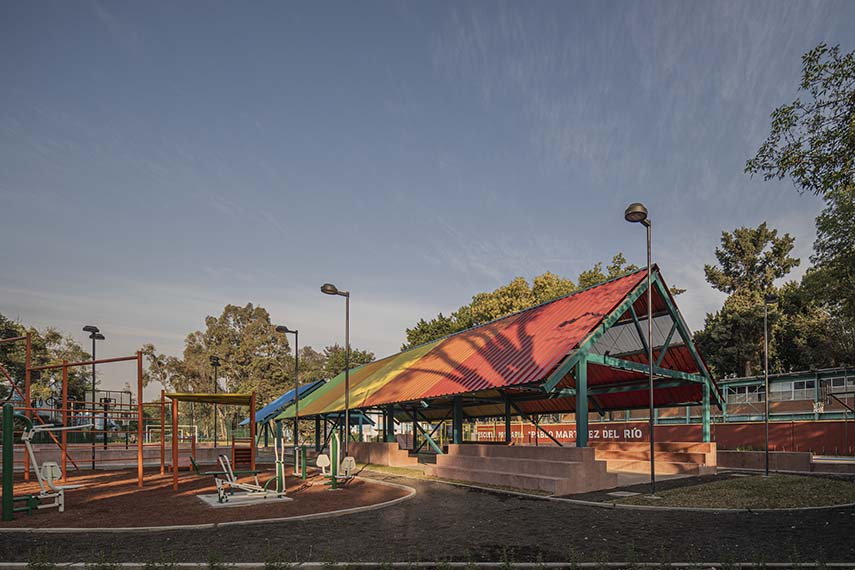
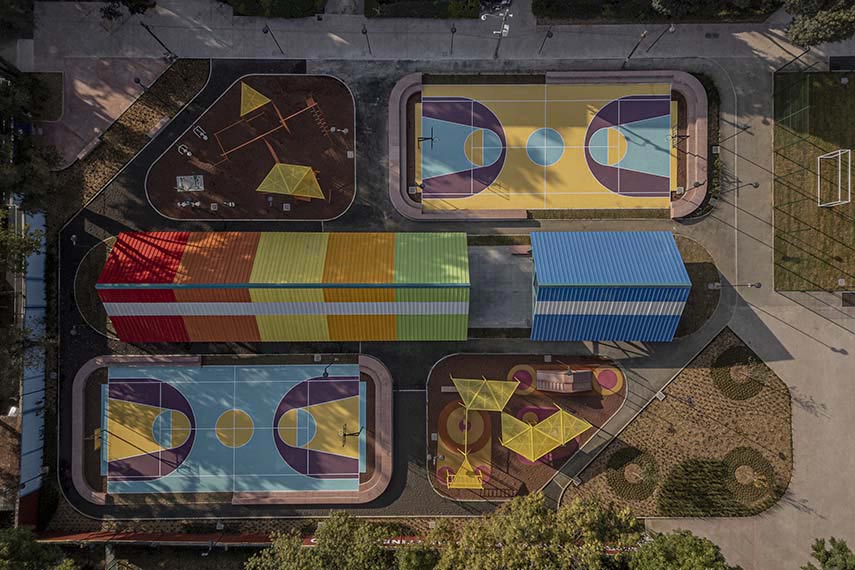
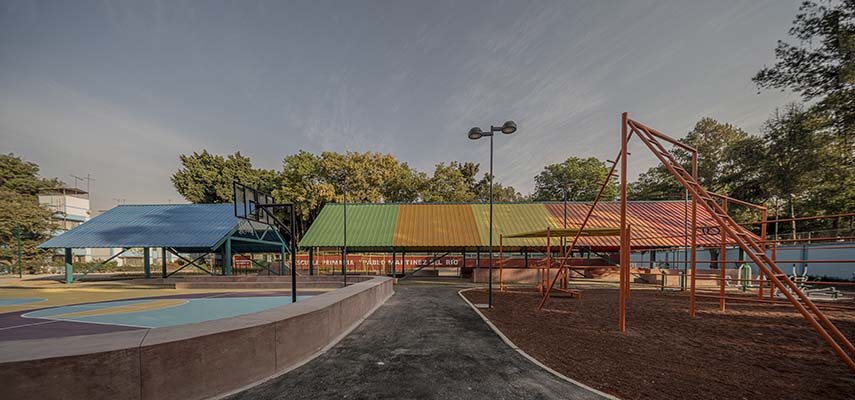
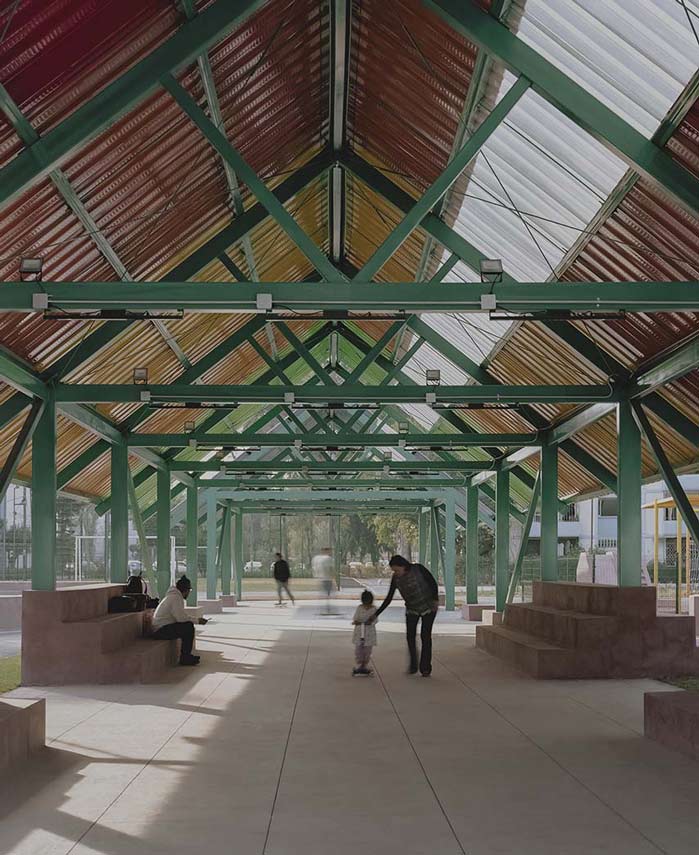
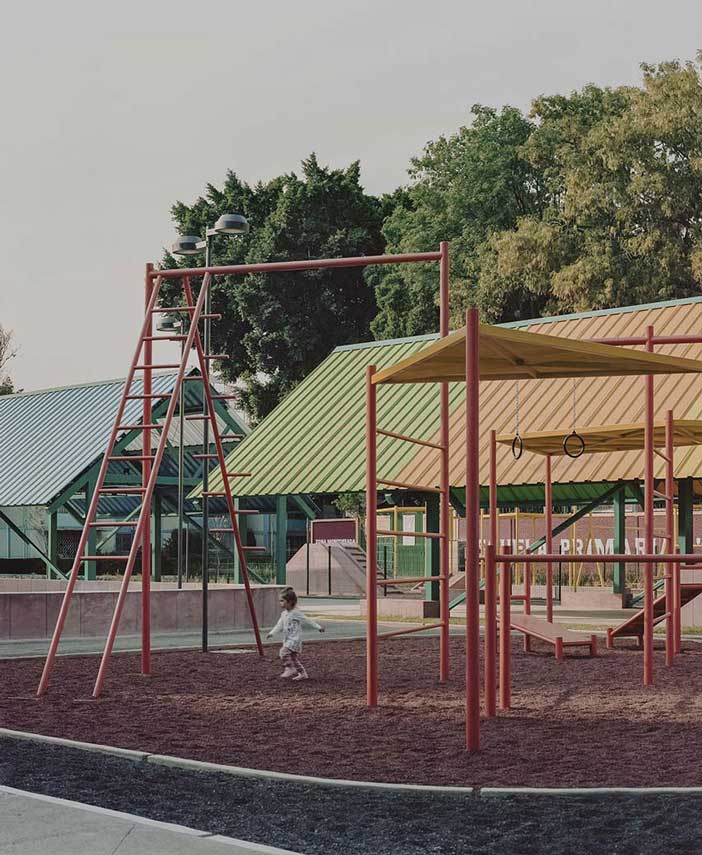
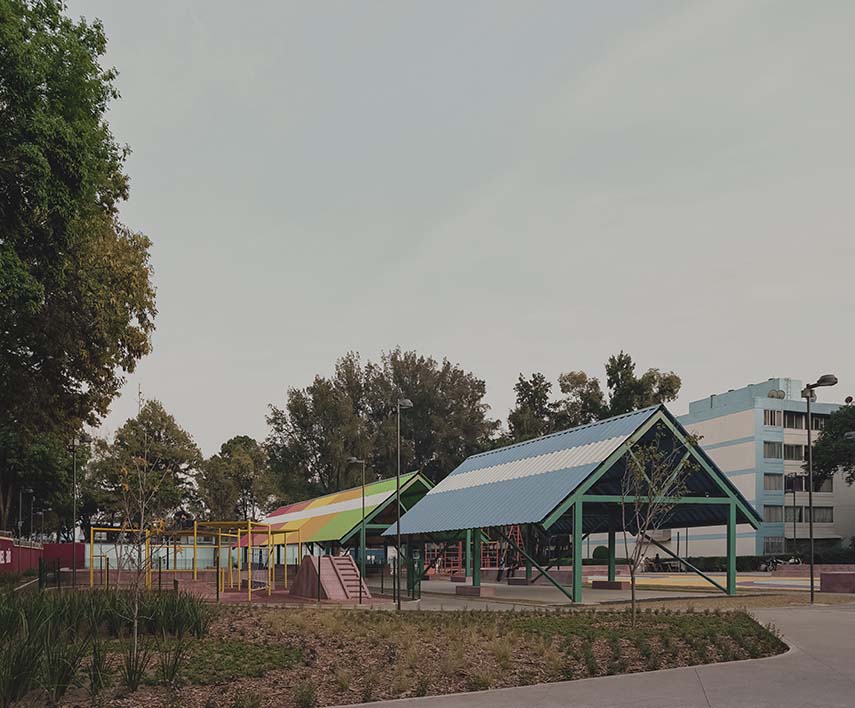
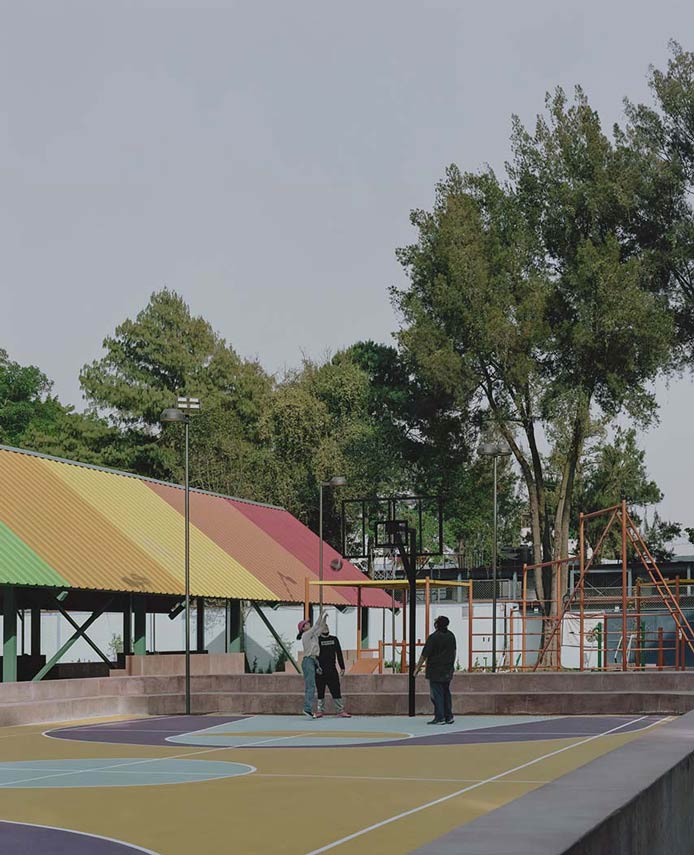
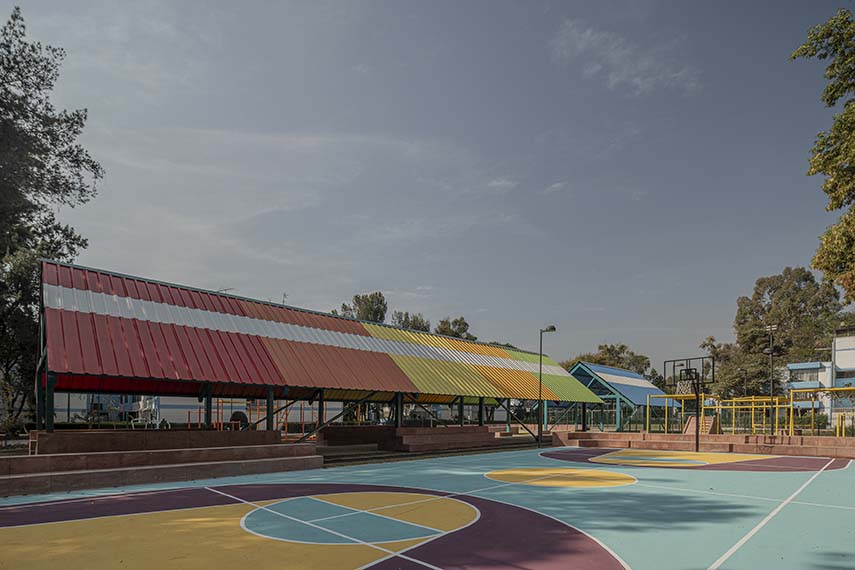
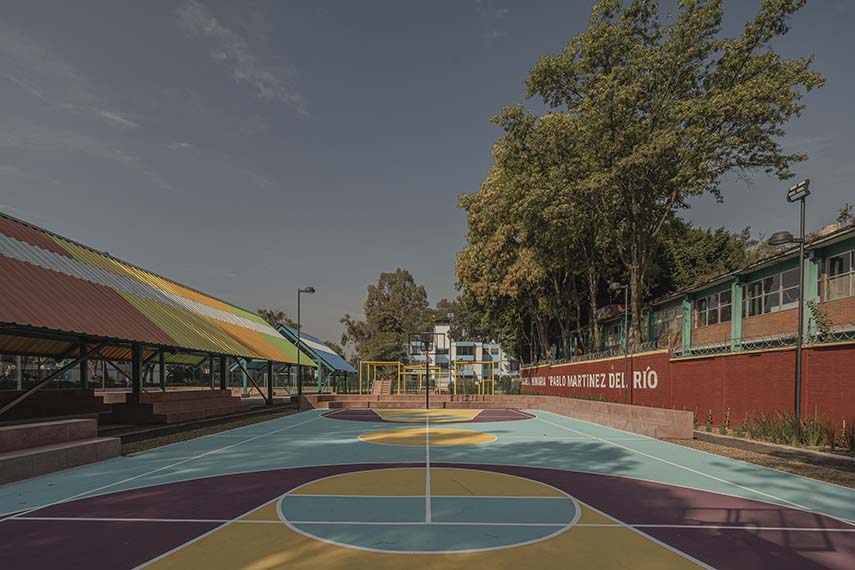
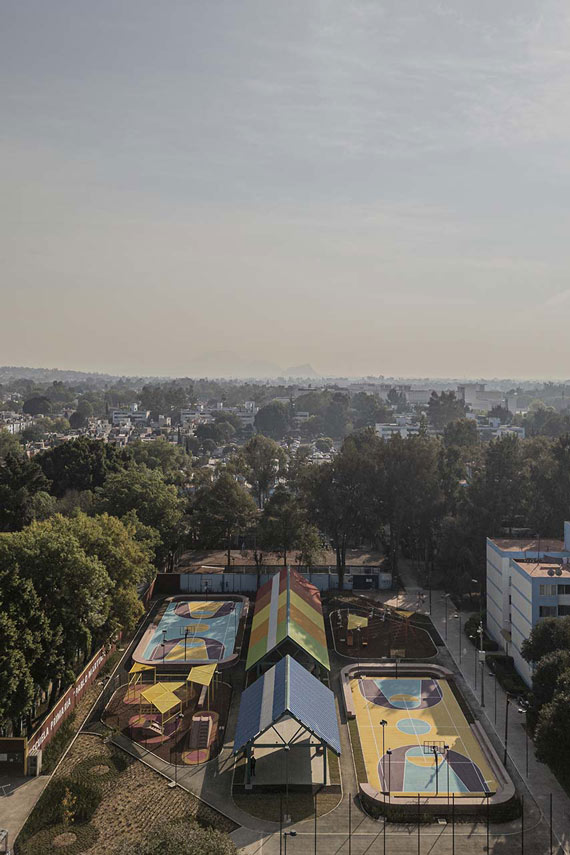
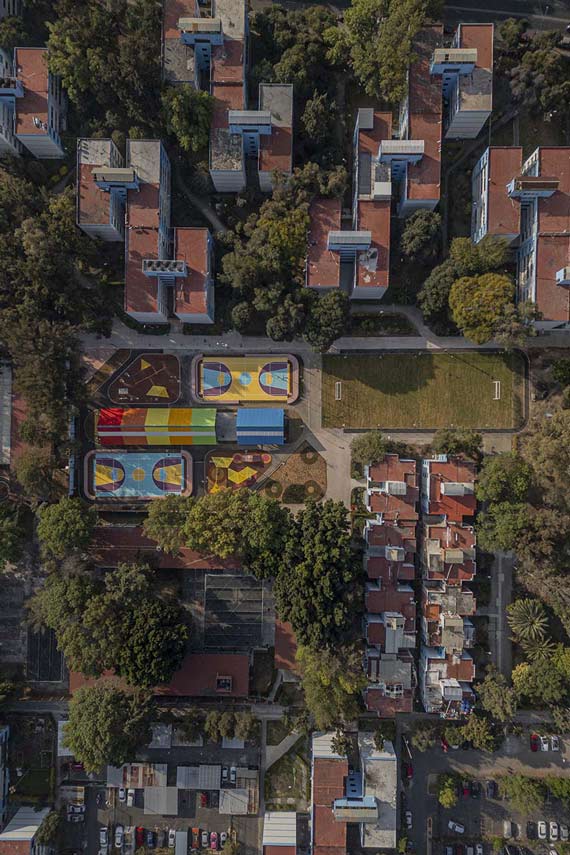
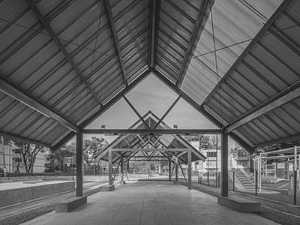
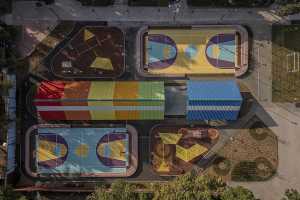
The square undergoing intervention is located between the two schools in the settlement: the two parallel perimeter walls of the nursery school "Héroes de 1810" and the primary school "Pablo Martínez del Río" border the space and create blind corners and hidden areas that encourage informal use, waste accumulation, and delinquency. The renewal of the public space reaffirms its function as a social hub for children after school and for all citizens. The colorful two-sloped structure in the center of the space brings new order to the square, strategically preventing improper uses and promoting visibility and safety

The social value of public space: UH INFONAVIT Culhuacán

The new features born from the participatory process with residents

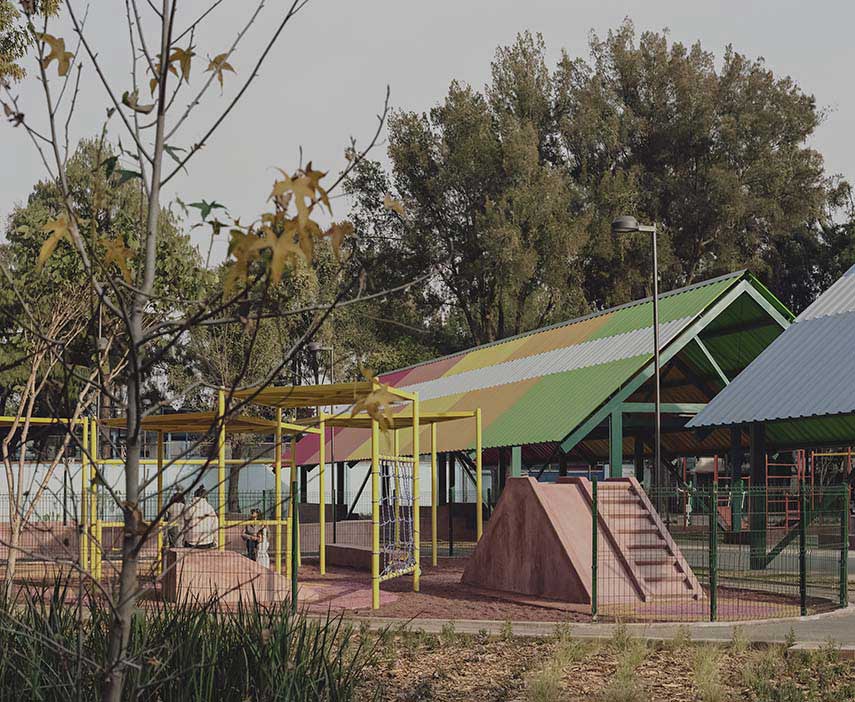
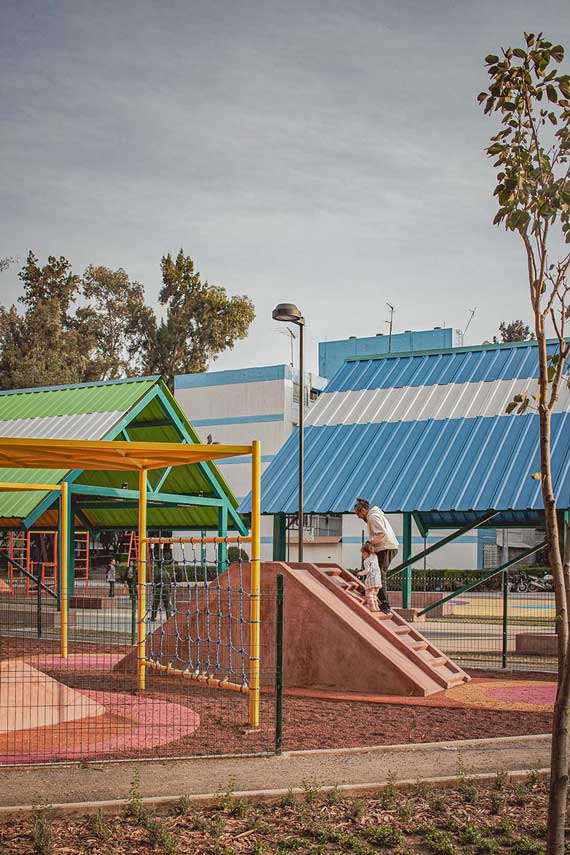
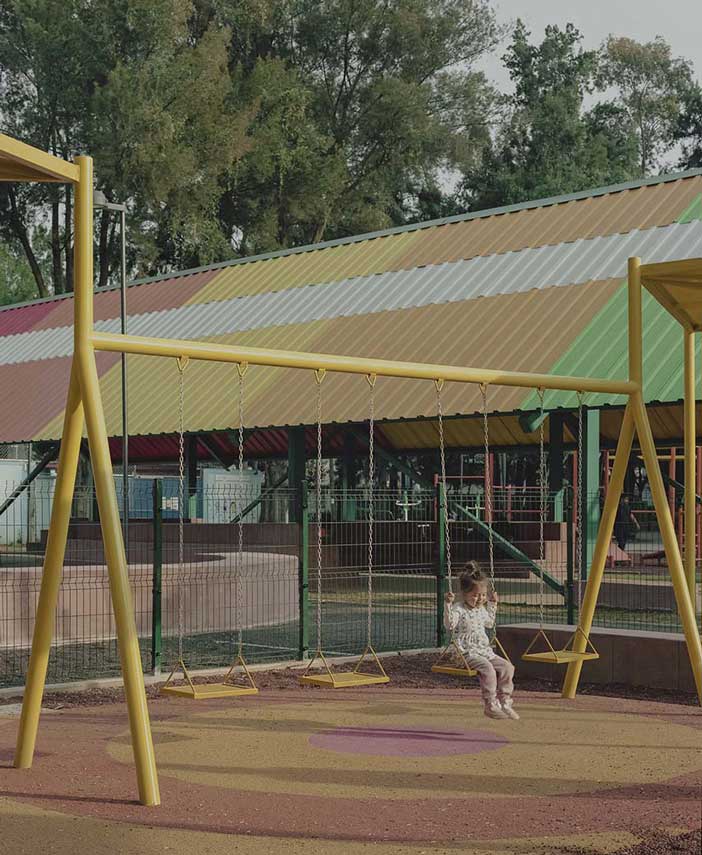
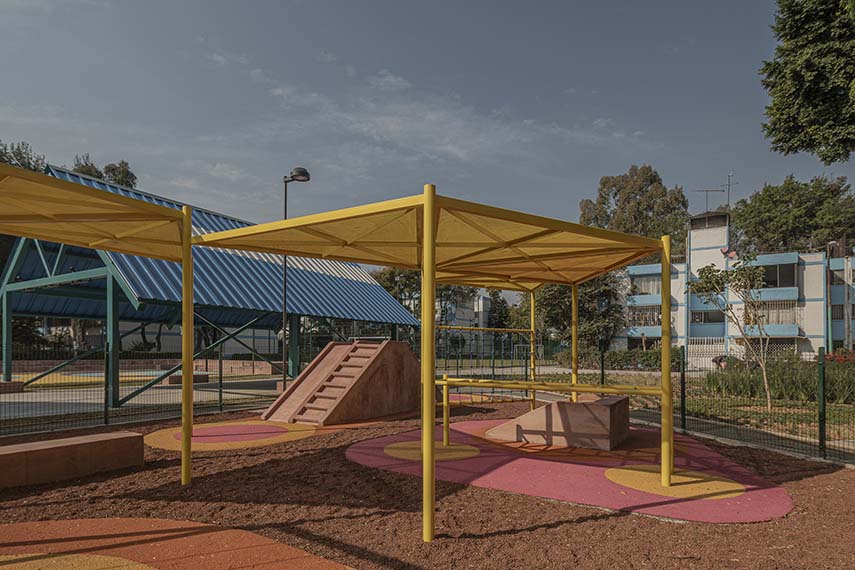
Around the central structure, the new elements chosen in a participatory process with residents are distributed: two basketball courts, an exercise area, a covered amphitheater, a playground for children, and a 600-meter running track, creatively integrated with walking paths to maximize space and budget. The new public space, colorful, vibrant, accessible, and environmentally responsible thanks to reusable materials and the redesign of rainwater management, is the result of the fruitful collaboration between the designers and the Desarrolladora de Ideas y Espacios led by Alberto Cejudo

The social value of public space: UH INFONAVIT Culhuacán

Gallery