Gakatei Restaurant: the design choices that open up to the view

Gakatei Restaurant: the design choices that open up to the view

Overlooking one of Japan's most iconic landscapes, the restaurant of Hotel Kitanoya is the result of an interior renovation that reinterprets the relationship between space, view, and material.

The iconic landscape of Amanohashidate

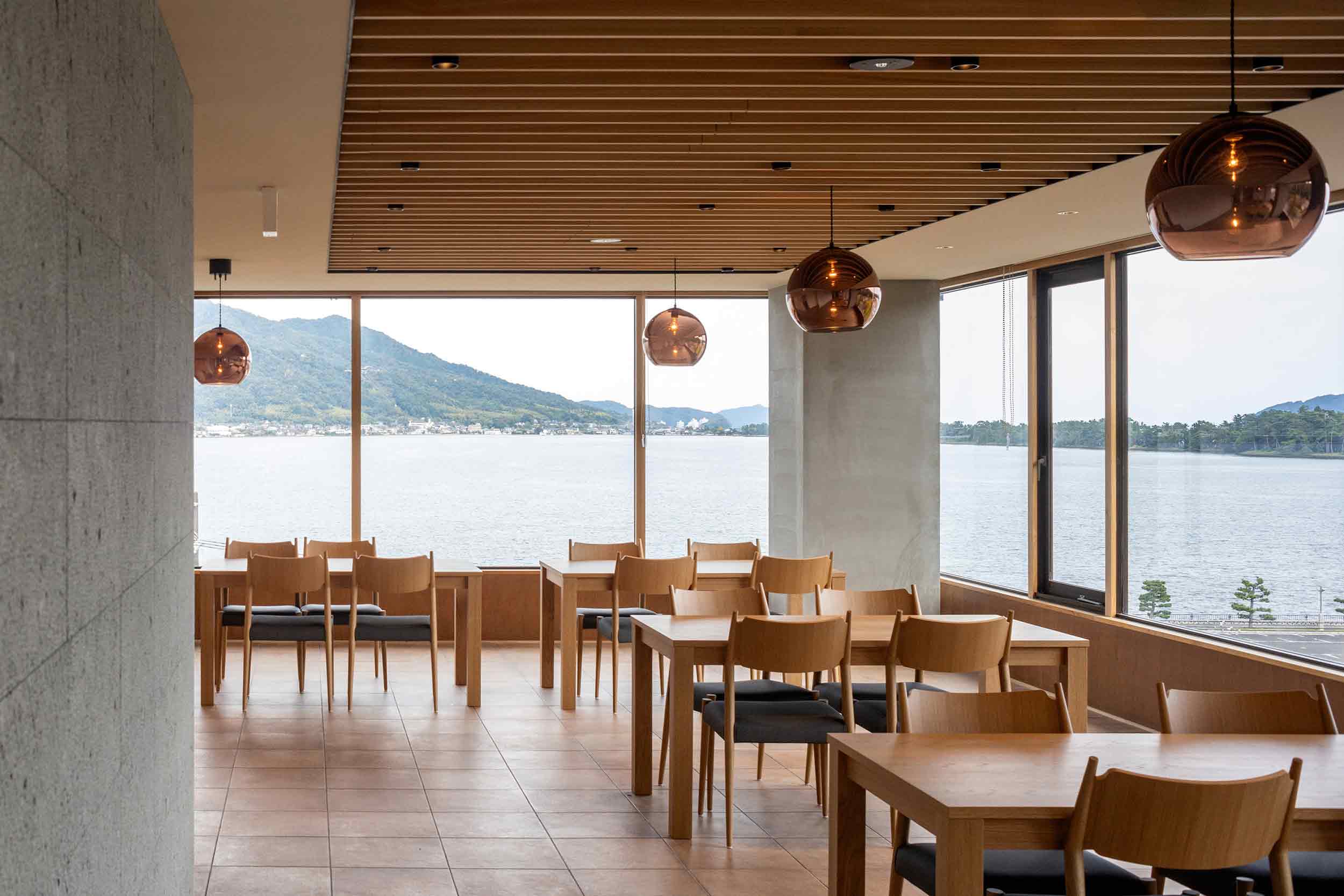
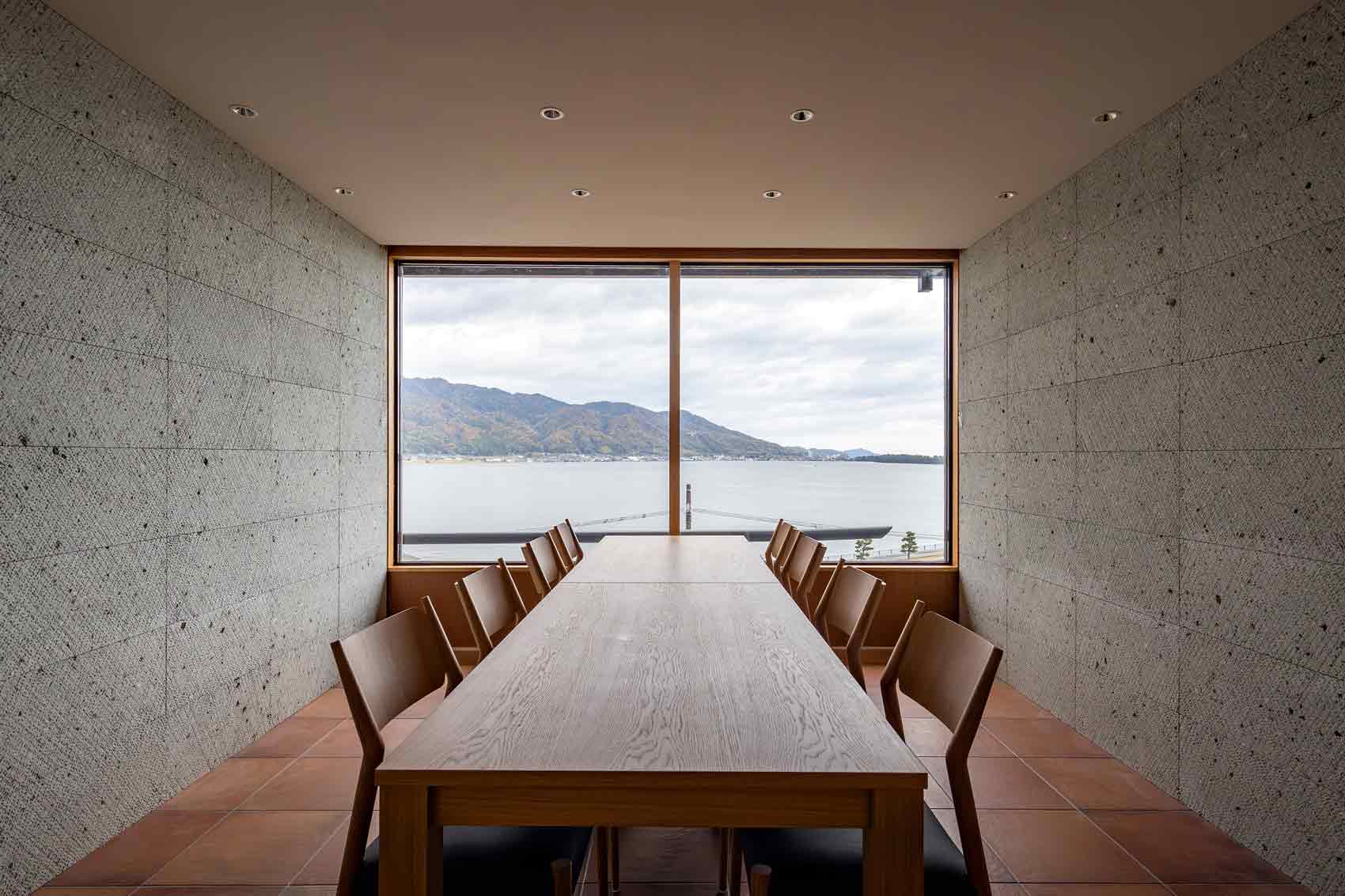
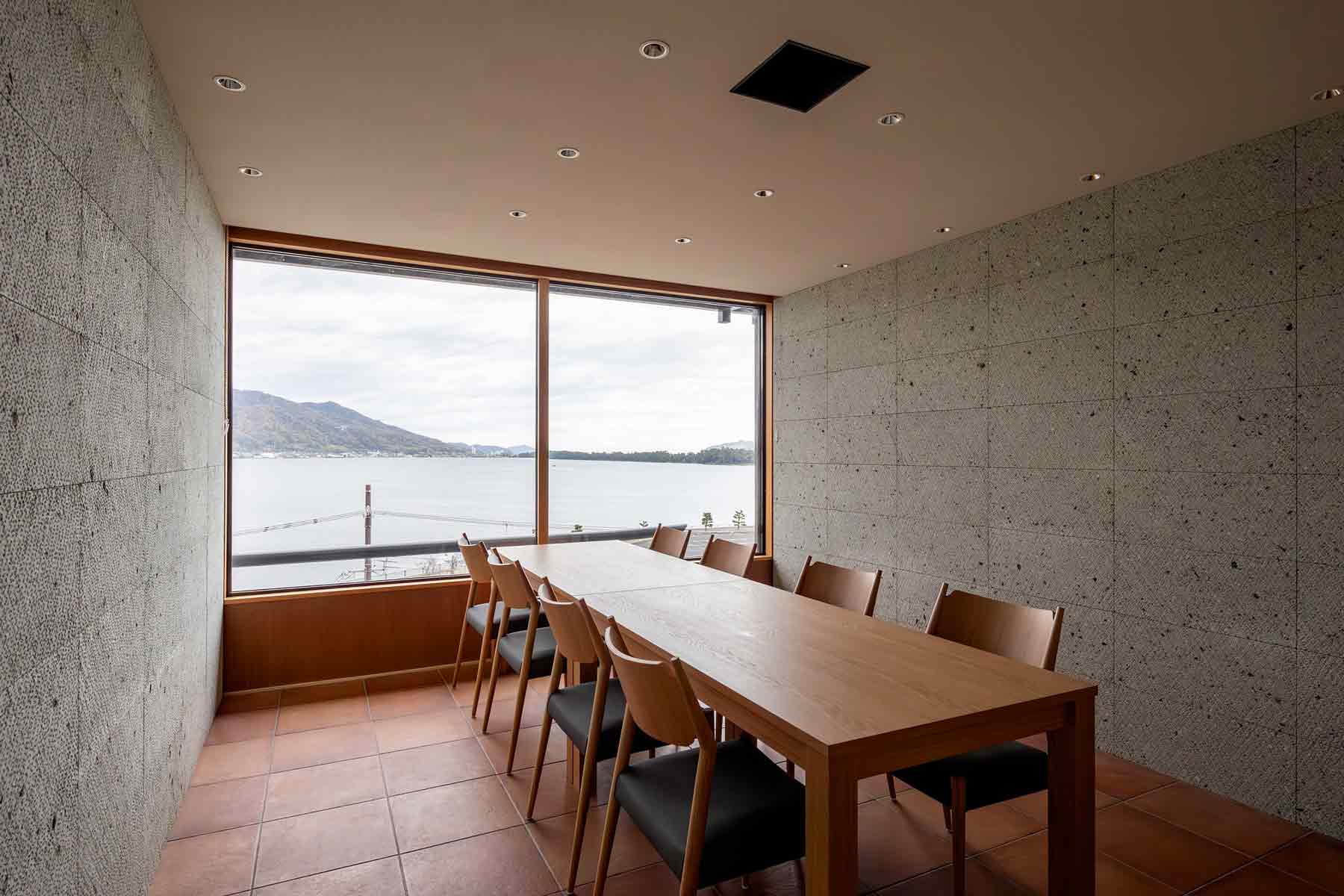
The Kitanoyas Hotel, located in Amanohashidate, one of Japan's most picturesque scenic spots, houses the Gakatei restaurant. Situated on the top floor of the building, the restaurant boasts a privileged panoramic view of the famous natural sandbar, a landscape feature that influenced many of the design choices.

Originally used as a simple dining room, the space has been completely renovated in its interiors by integrating previous guest rooms and adjacent banquet halls, creating a new restaurant of about 300 square meters, designed to accommodate a large number of guests without compromising on spatial quality.

Gakatei Restaurant: the design choices that open up to the view

Organization of spaces and management of planimetric irregularities

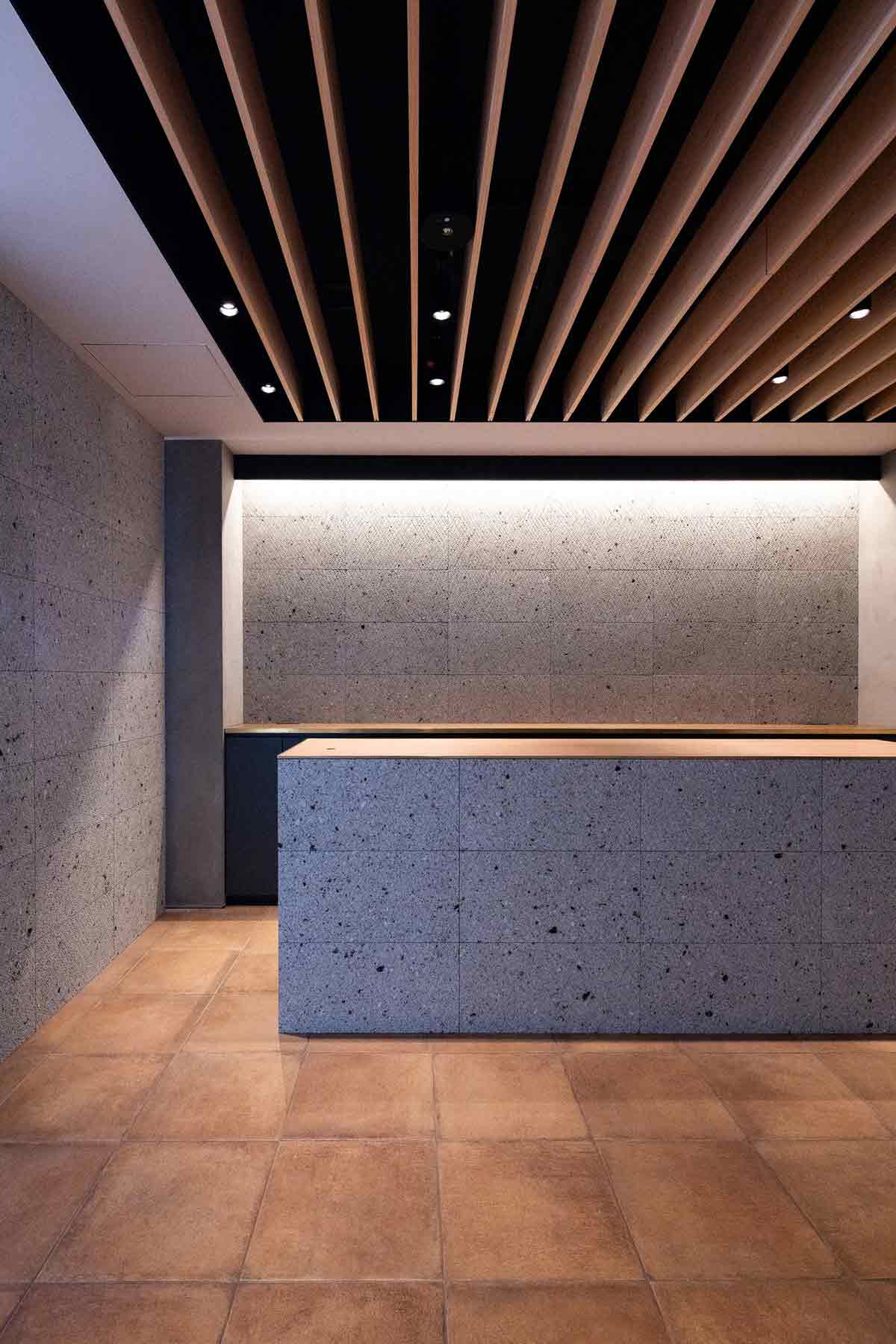
The project by Kenzo Makino & Associates addressed the complexity of an irregular floor plan, typical of reuse interventions and new renovation projects, by reorganizing secondary functions – such as entrance, private rooms, and service areas – along the existing recesses and projections. This strategy allowed to rationalize the layout and free up the main spaces dedicated to dining.

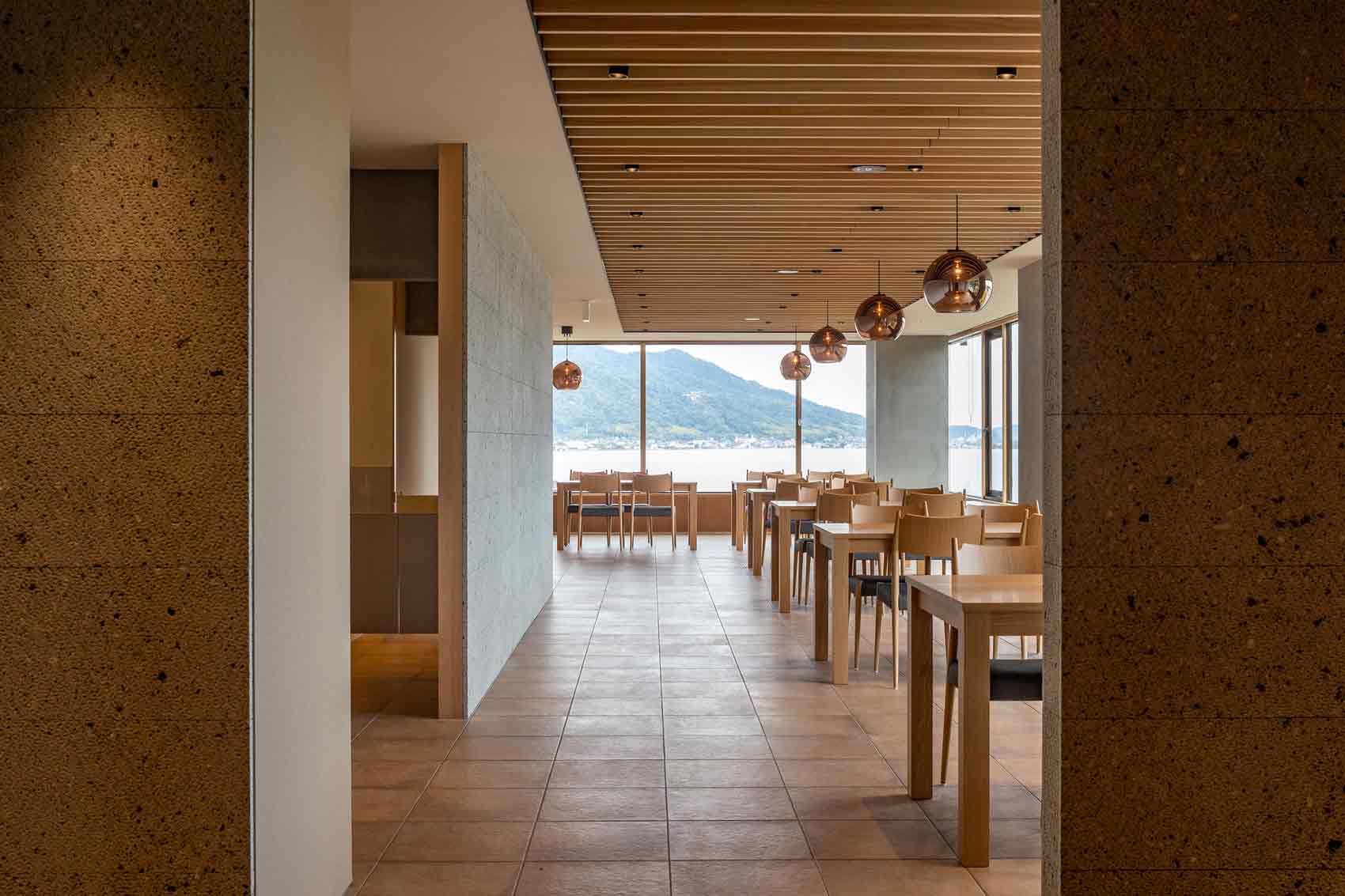
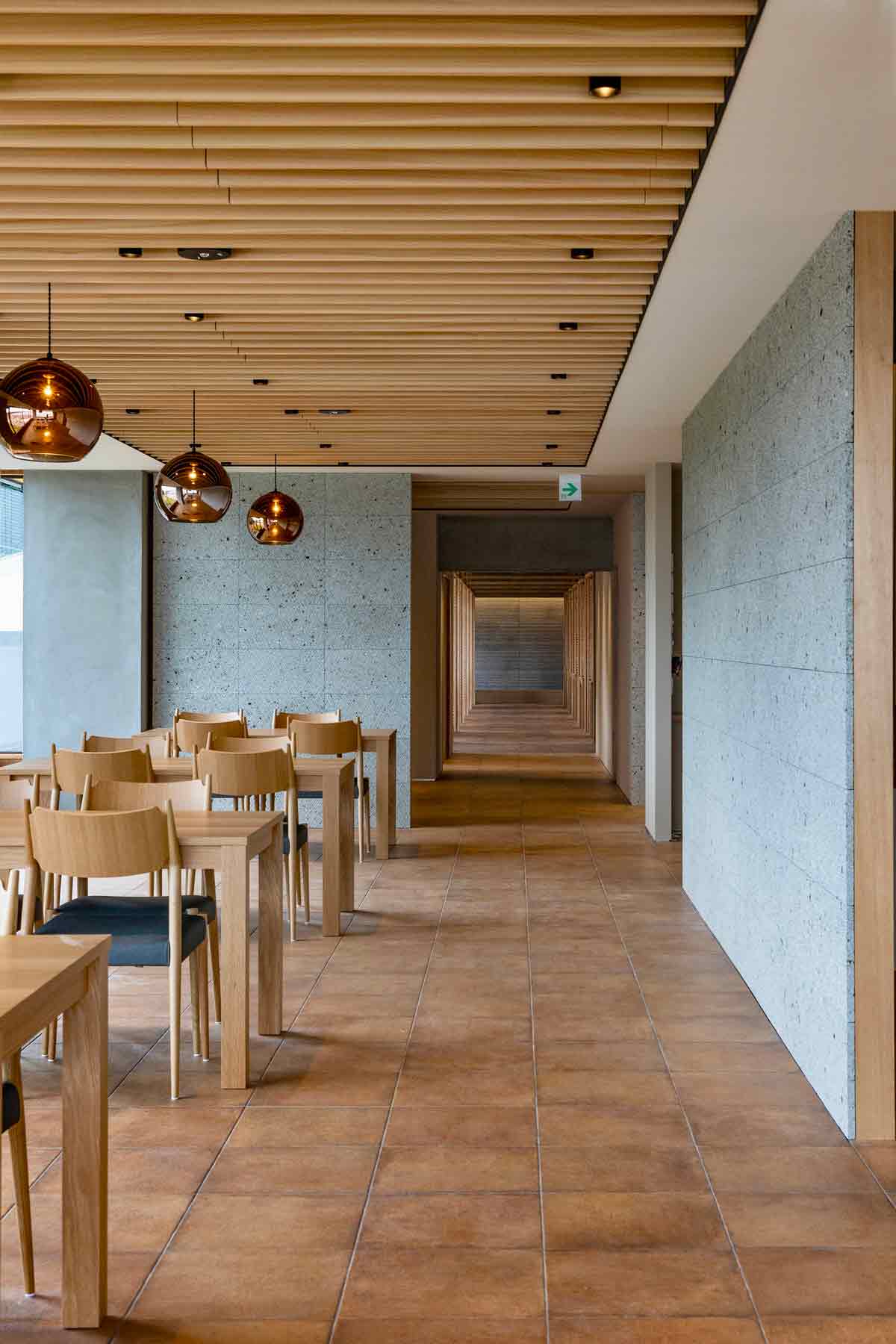
Considering the large capacity of the venue, a central corridor approximately 40 meters long and 1.6 meters wide was introduced, designed to ensure clear visibility to the staff, fluidity in pathways, and service efficiency, a key aspect in the design of large-scale dining spaces.

Gakatei Restaurant: the design choices that open up to the view

Relationship between spaces, view, and atmosphere

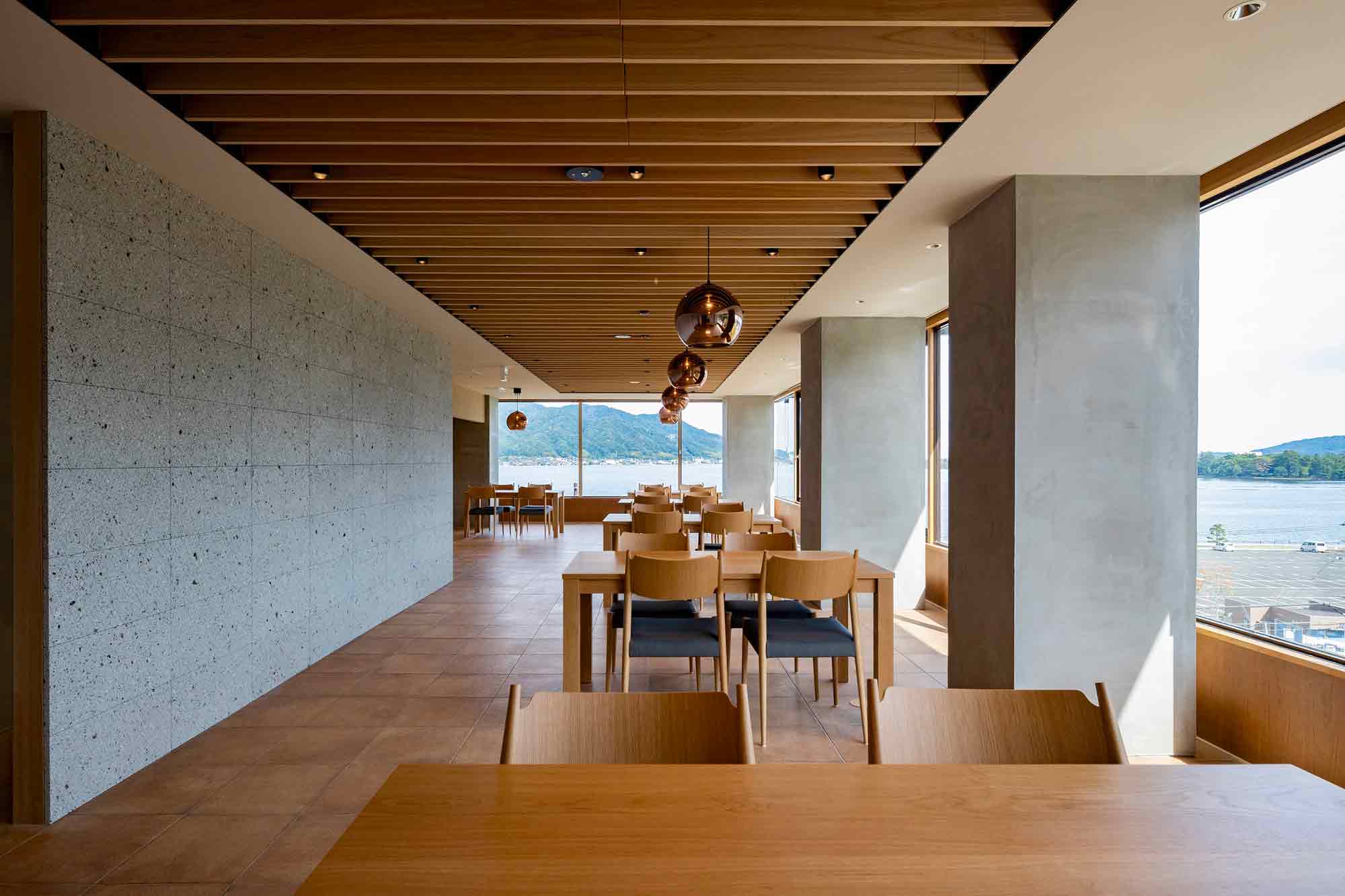
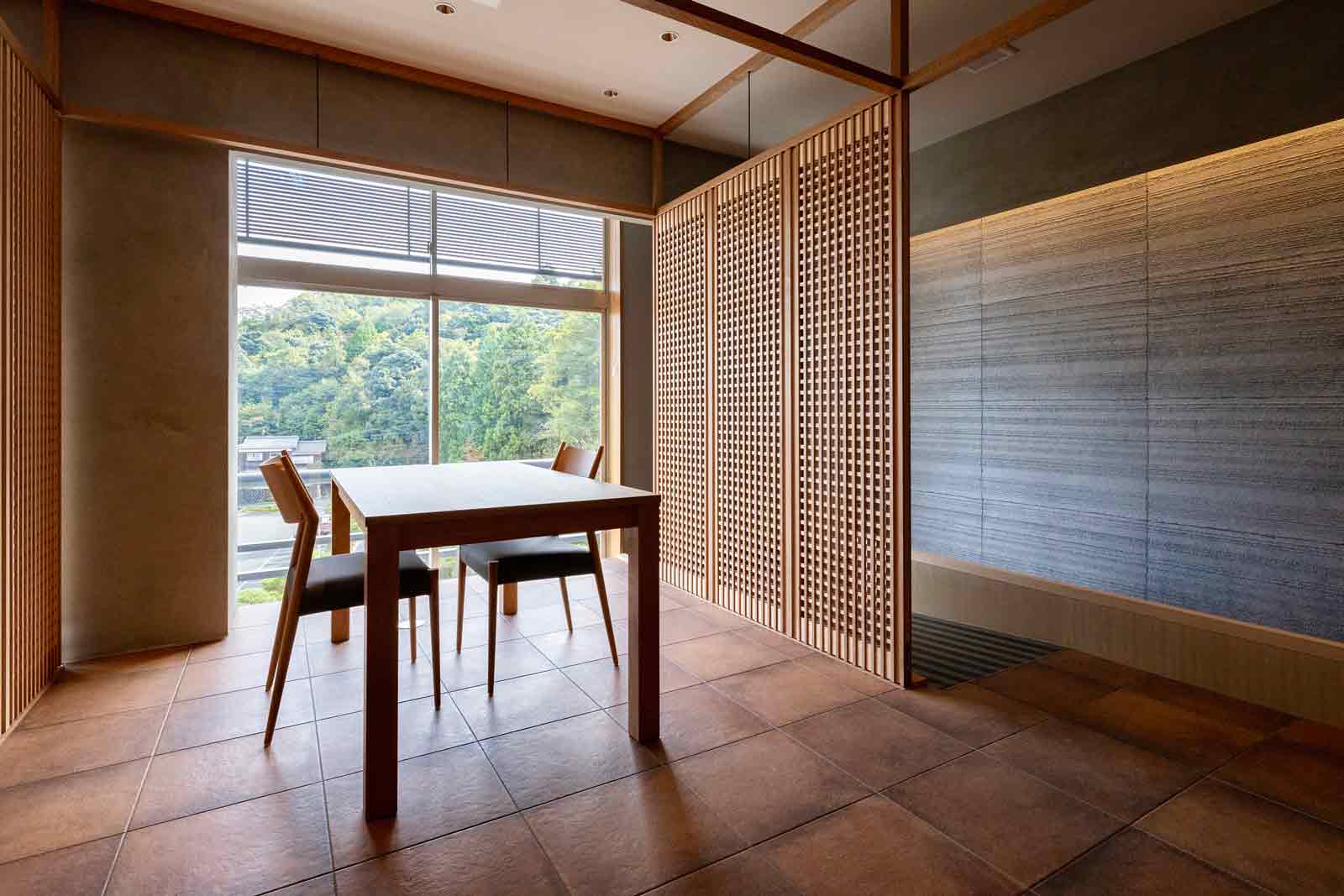
Excluding the private rooms, the restaurant area is divided into two main zones: one facing directly towards Amanohashidate and one on the mountain side, with partial views of the surrounding landscape. In the seaside zone, the seating areas have been generously spaced apart to create an open and airy environment, capable of fully enhancing the iconic view.

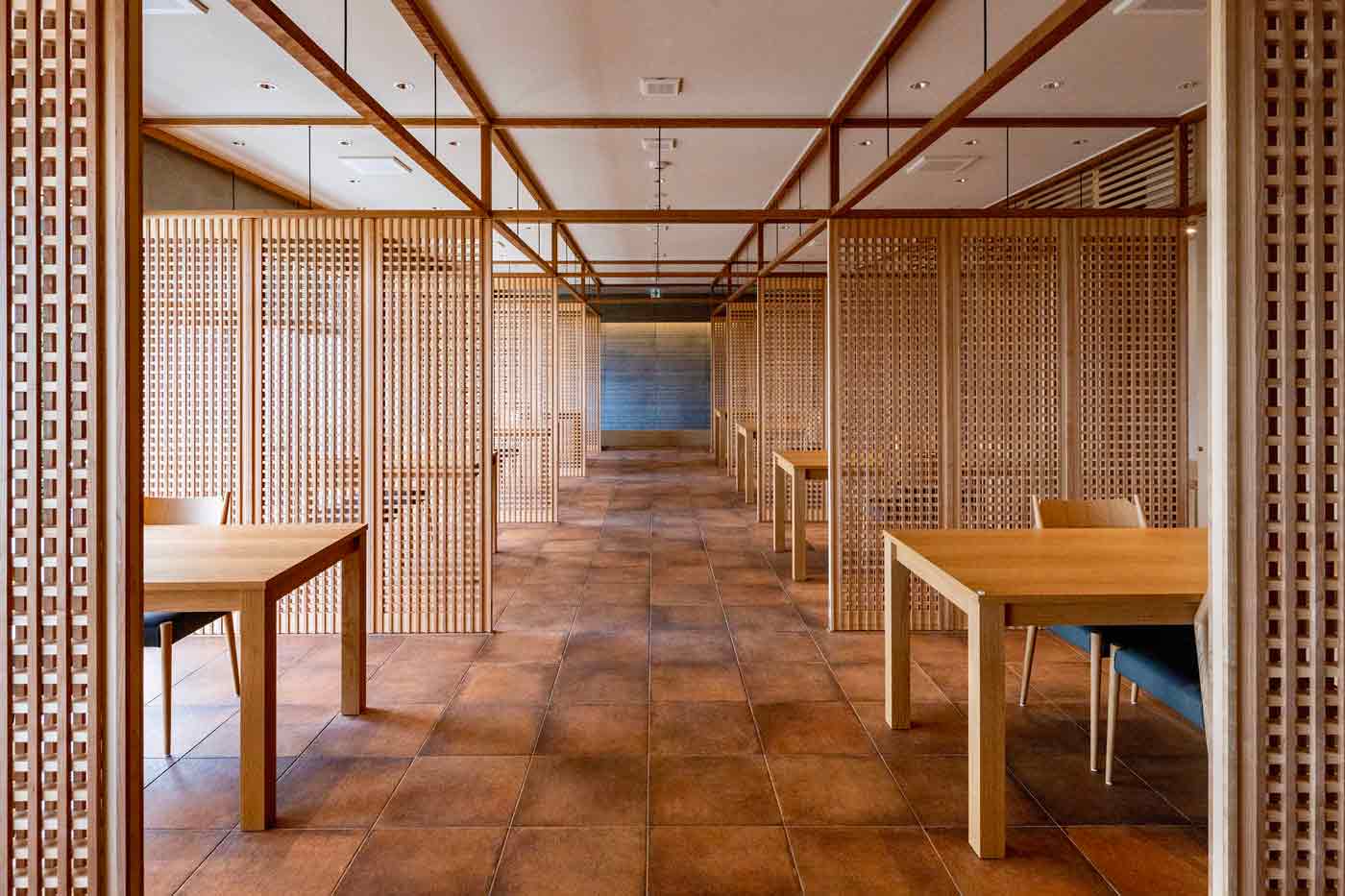
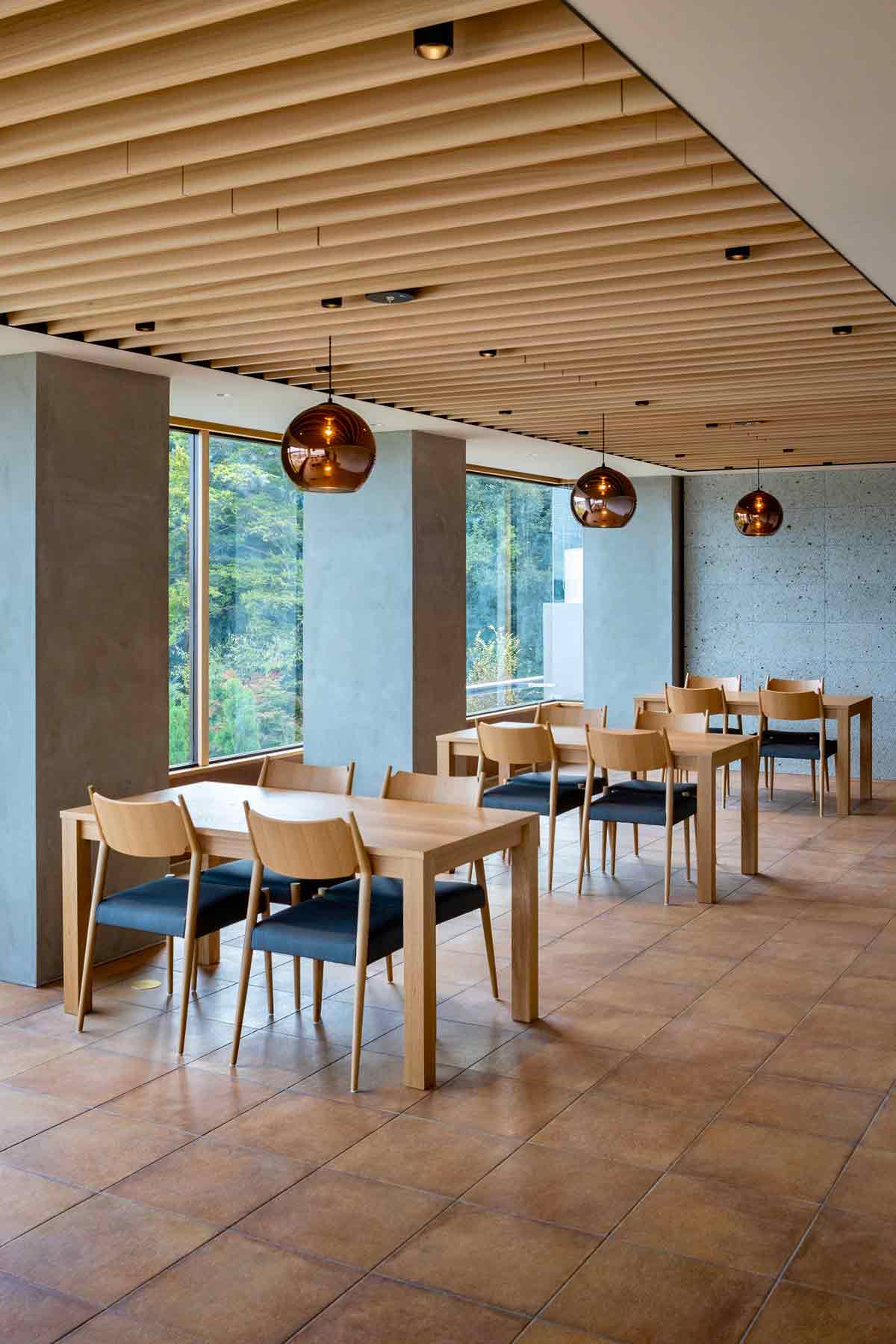
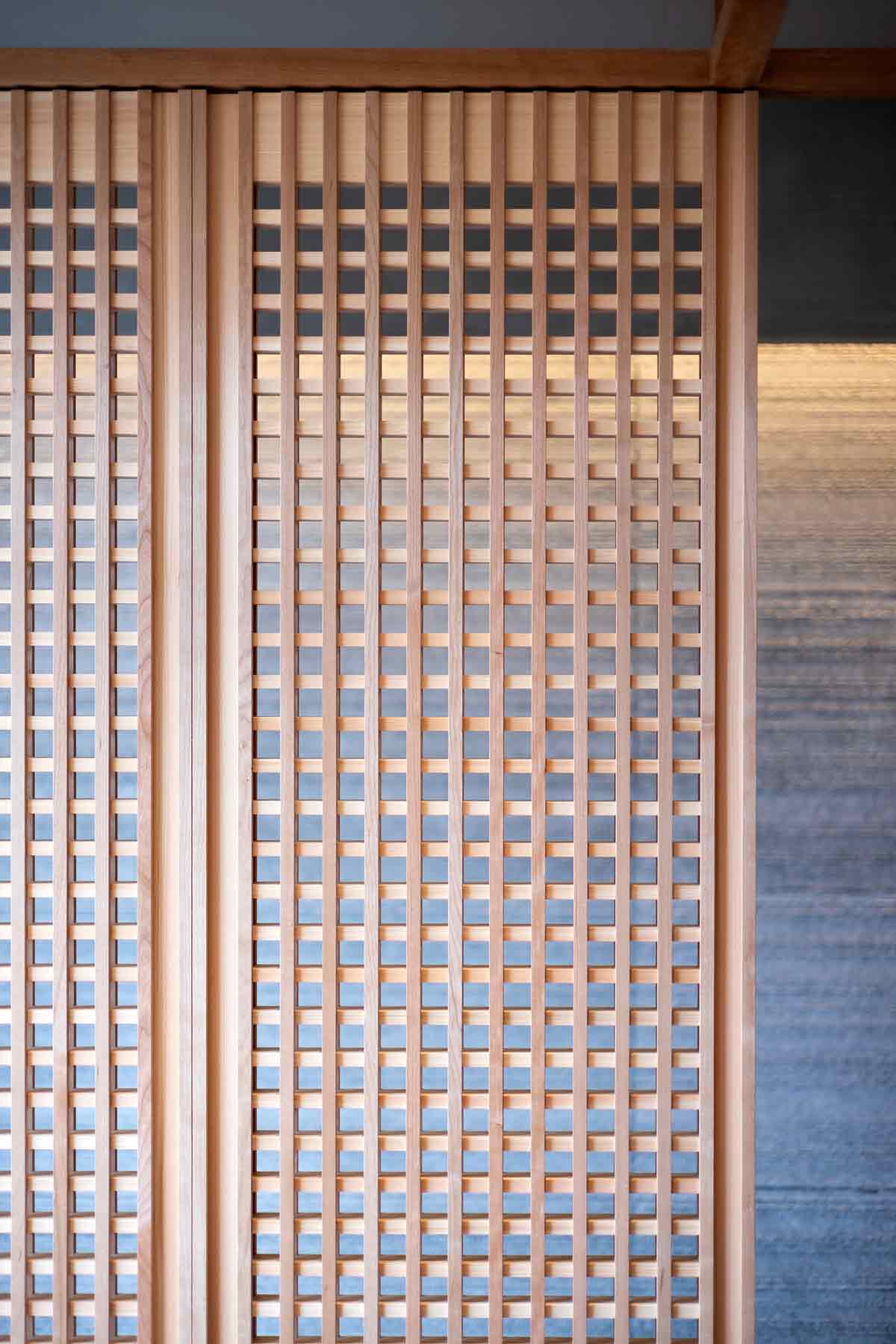
Conversely, the mountain-side zone has been designed with a more intimate and cozy character, thanks to the use of grid partitions that delicately divide the space. These elements combine vertical slats in hinoki (Japanese cypress) and horizontal elements in black cherry wood, giving rise to an intertwined design that recalls the warp and weft of traditional fabrics.

Gakatei Restaurant: the design choices that open up to the view

Materials, flexibility, and architectural identity

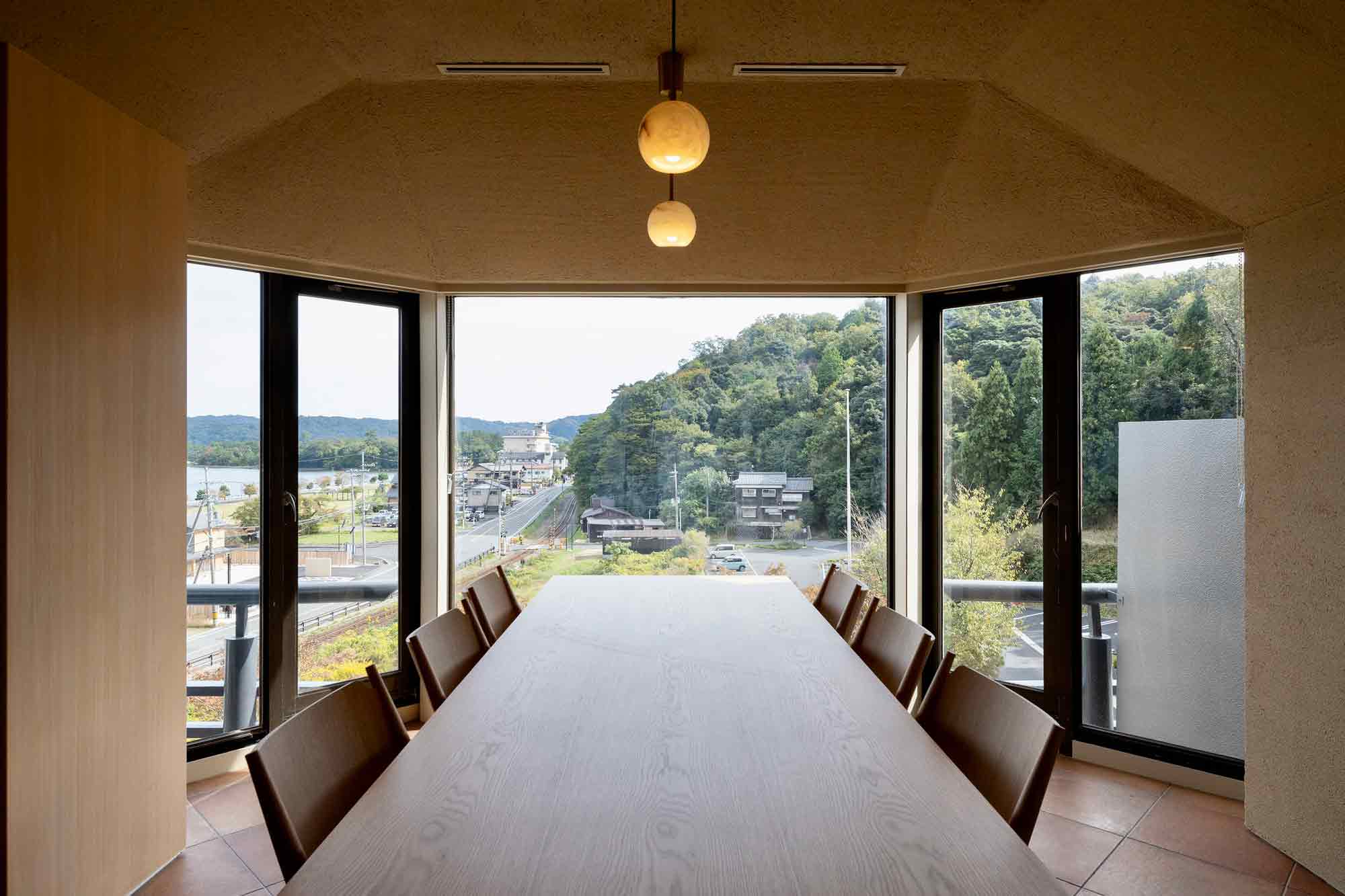
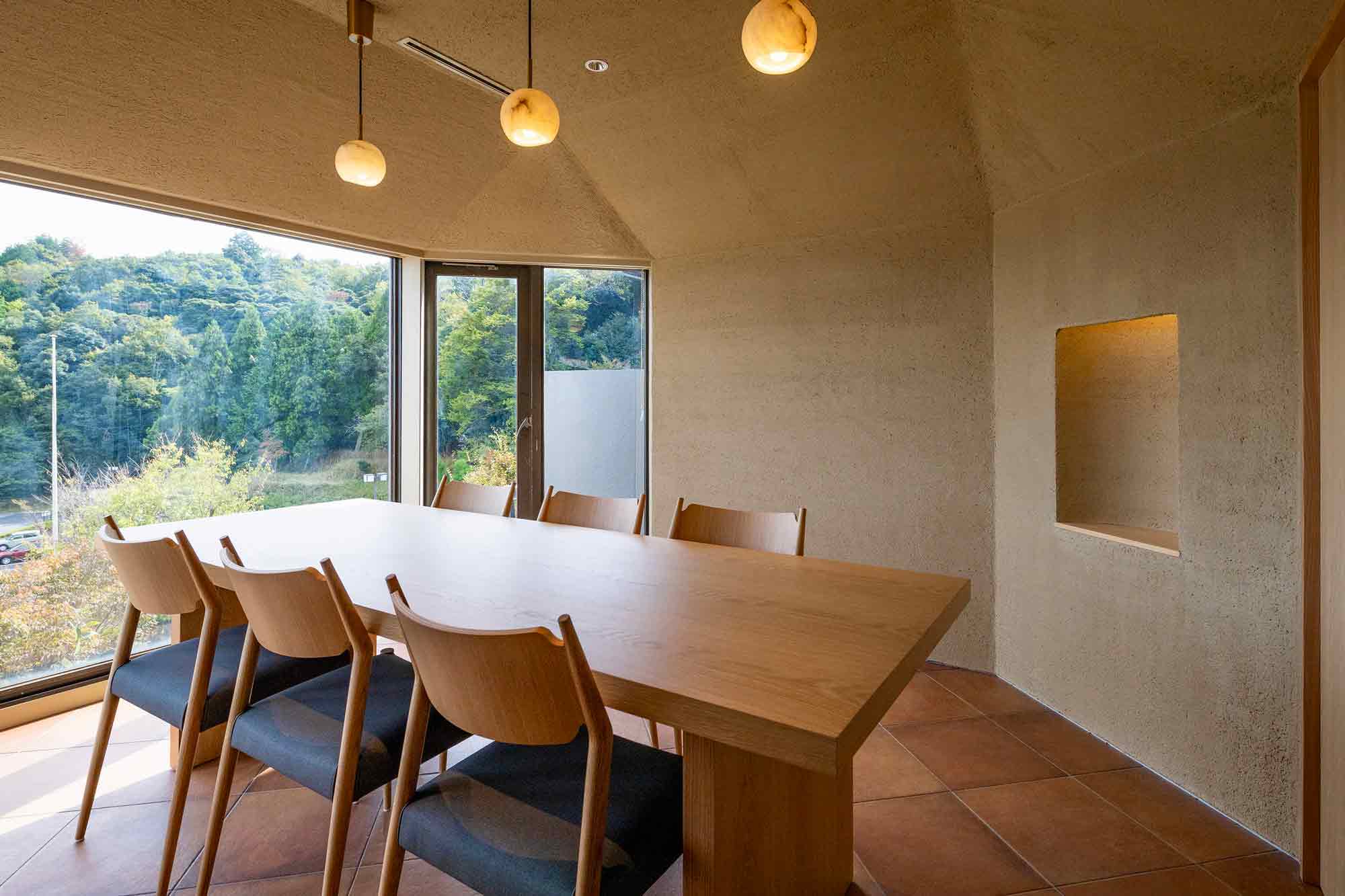
The partitions are modular and removable, allowing the space to be reconfigured according to operational needs or events. A distinctive element of the original building, a quarter-sphere bay window, has been reinterpreted through design by creating a semi-spherical private room, achieved by replicating the same geometry on walls and ceiling in a specular position.

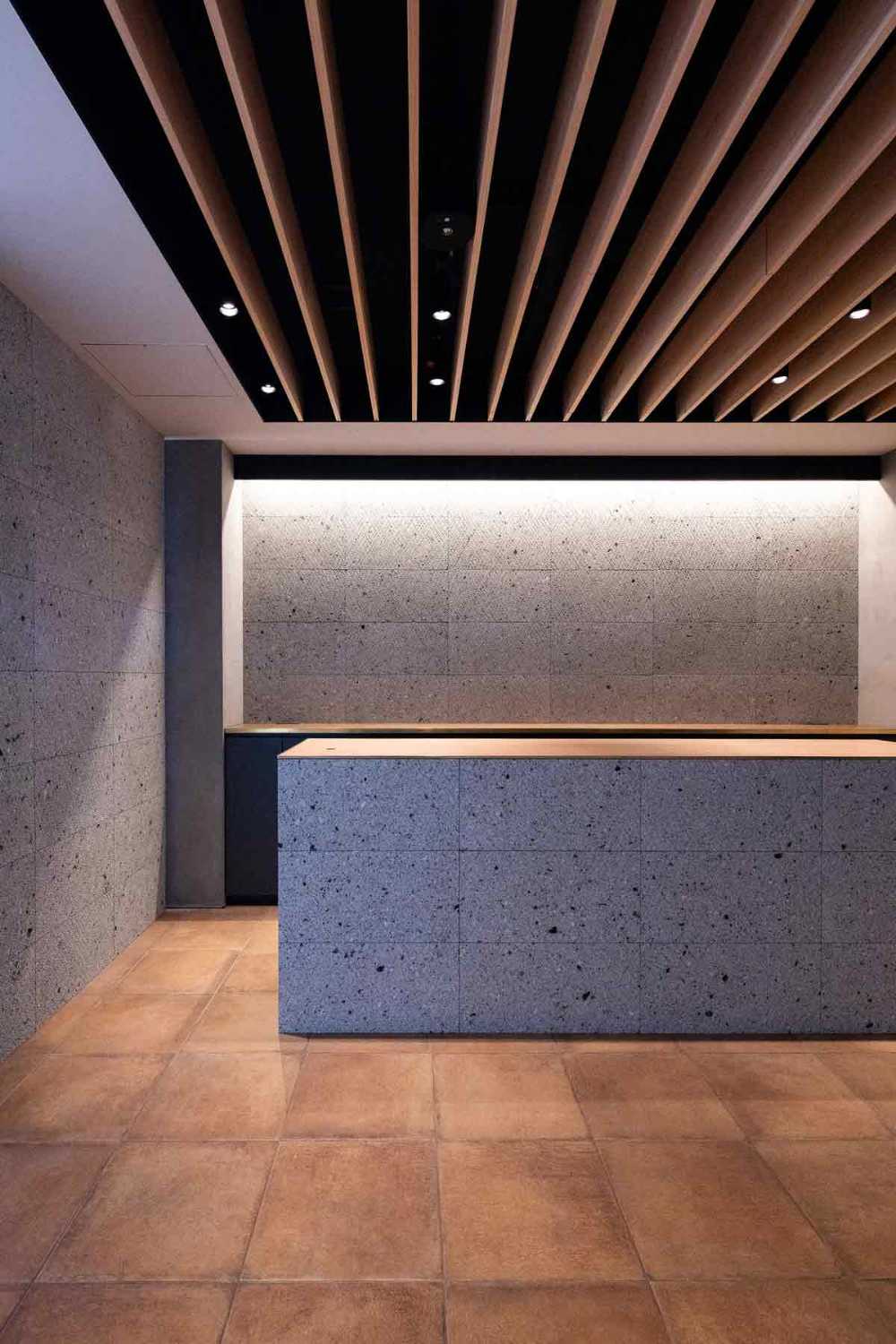
The material palette – composed of Ōya stone, reddish-brown porcelain tiles, hinoki cypress, and black cherry wood – helps create a warm, sober, and refined atmosphere, balancing formality and informality. The result is a space that interprets interior design for dining as a sensory and spatial experience, in dialogue with the natural context and contemporary functional needs of architectural projects.

Gakatei Restaurant: the design choices that open up to the view

Gallery