Discovery Bay House. Rhythm, grid, and landscape.

Discovery Bay House. Rhythm, grid, and landscape.

A residence in the Pacific Northwest transforms a strict orthogonal structure into a spatial experience made of light, wood, and relationships with nature, shaping an architectural narrative that combines order and discovery. Discovery Bay House unfolds as a spatial narrative of rhythm, shadows, and material, where geometric precision meets the sensory dimension of dwelling.

A client, a vision, a place to listen to

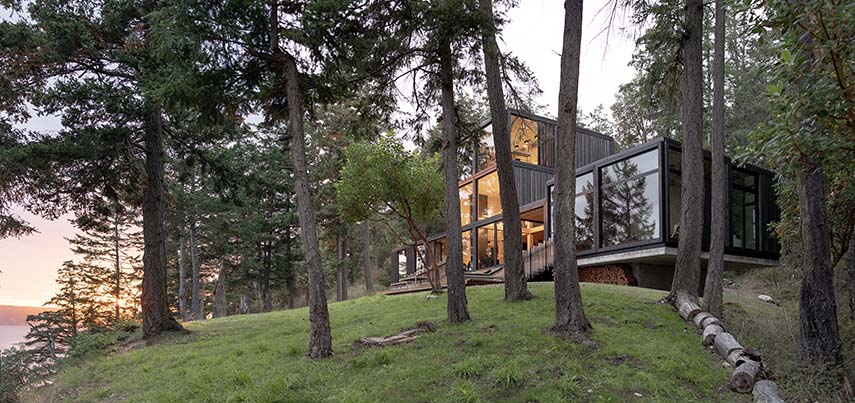
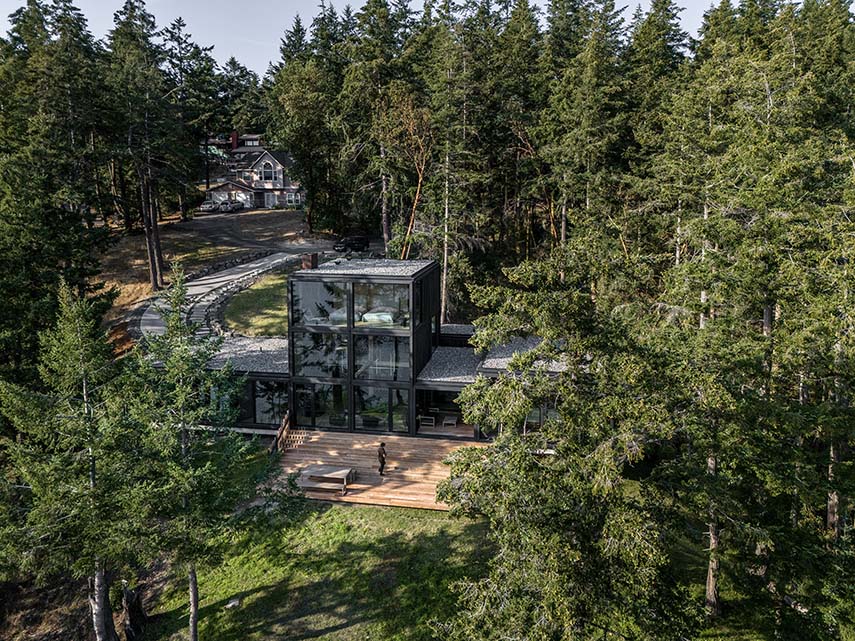
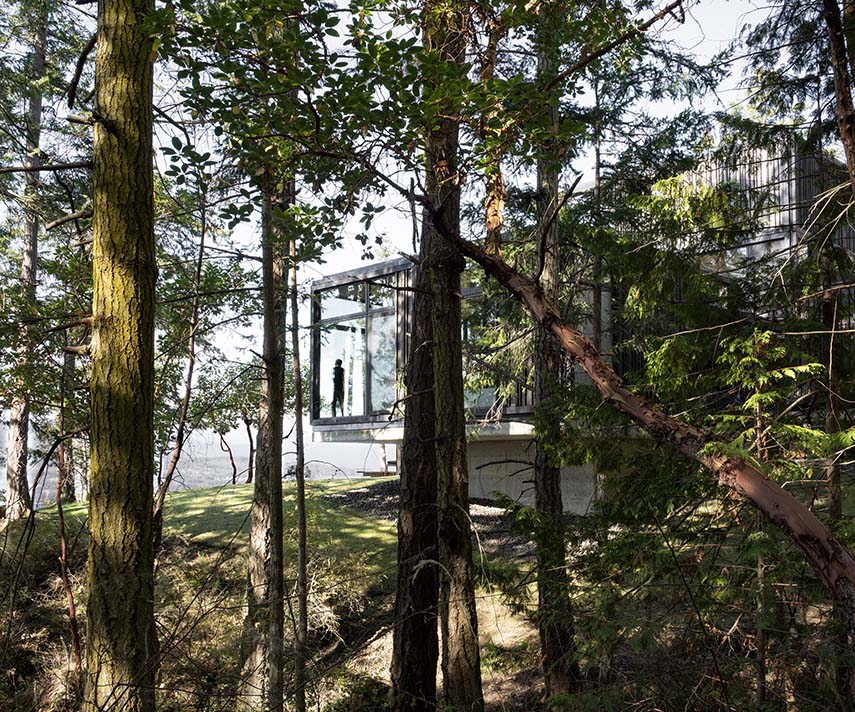
Discovery Bay House is born from the meeting between the client Michael Ross and the studio Dekleva Gregorič Arhitekti, which took place after the discovery of one of their ocean-facing residences in Hawaii. Michael, with a background between New York and Los Angeles, wanted a house capable of welcoming family and friends, but also of reflecting a precise idea of order and balance. The choice of the site, with views of Discovery Bay and orientation towards the Olympic Mountains, becomes crucial: a slight slope towards the water provides the opportunity to build without forcing the terrain, establishing a deep dialogue with the natural landscape from the very beginning.

Discovery Bay House. Rhythm, grid, and landscape.

Private horizontality and shared verticality

The project is based on a clear spatial idea: to provide Michael with a predominantly horizontal, reserved, and fluid living experience, while offering guests a vertical, more dynamic and autonomous path. This overlap of experiences creates an articulated sequence of spaces that unfold between levels, double volumes, and covered terraces. It is precisely this layered construction that makes the residence a significant example of how architectural projects can respond to different needs through precise spatial direction, without ever losing formal coherence.

Discovery Bay House. Rhythm, grid, and landscape.

The structural grid as a sensory experience

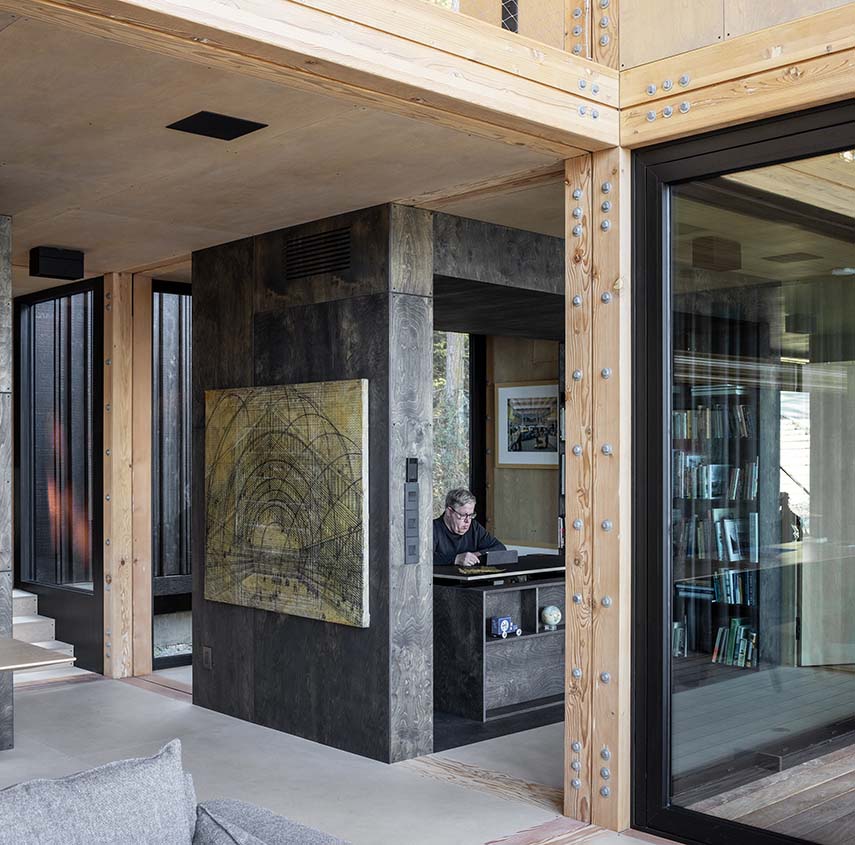
From the reinforced concrete base emerges a three-dimensional grid inhabited, composed of pilasters and beams in Douglas fir, which defines the entire building structure. The entire house is made of wood: structure, cladding, shading systems, and details, with a sustainable architecture approach and low environmental impact. The structure remains intentionally exposed, with exposed fastening elements that recall traditional American construction techniques. Birch plywood panels, fixed with visible black screws, cover floors, walls, and ceilings, creating a crafty and tactile aesthetic.

Discovery Bay House. Rhythm, grid, and landscape.

Light, ventilation, and dialogue with the landscape

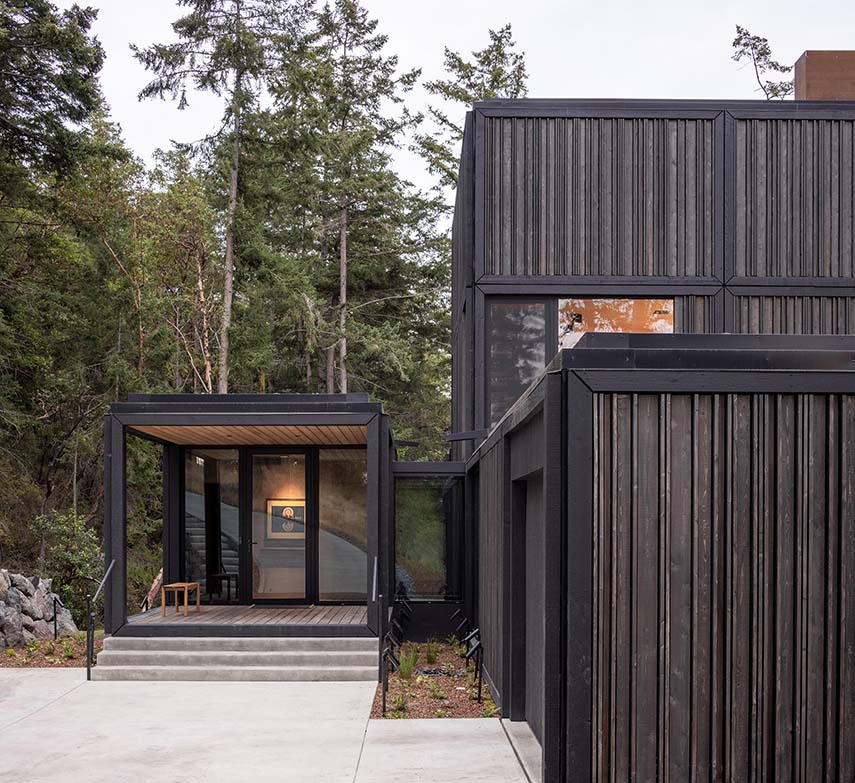
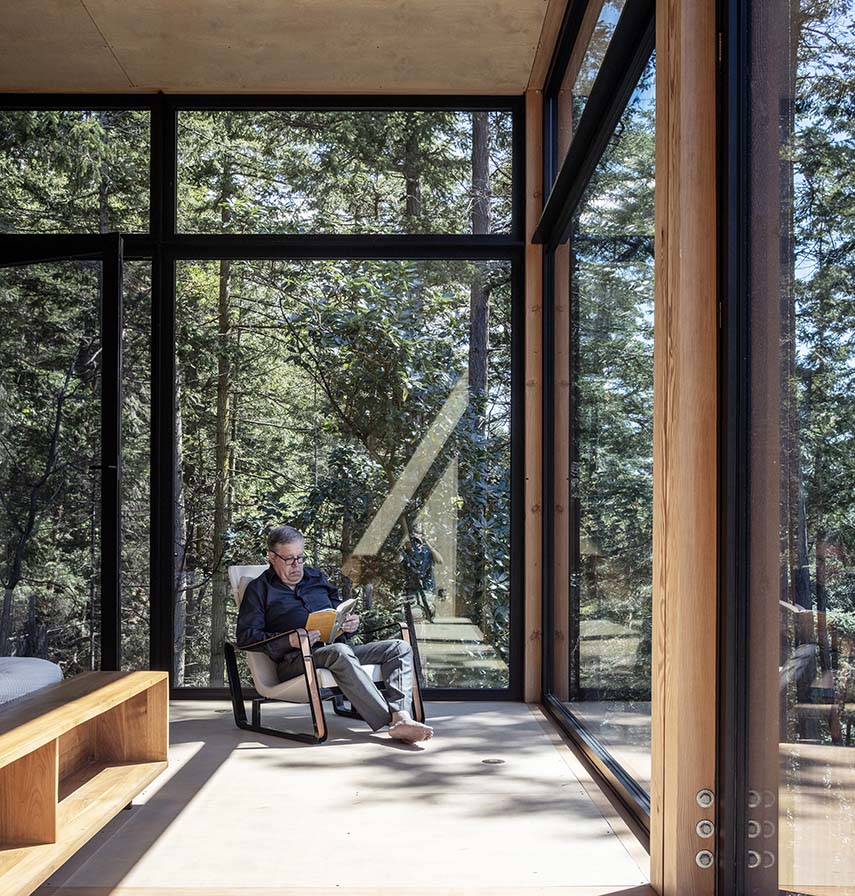
Natural light and cross ventilation become fundamental design tools. Each space is crossed by diagonally positioned openings, favoring air exchange and an ever-changing perception of the spaces. On the outside, the darkened cedar cladding engages in a dialogue with the surrounding forest: the vertical slats, oriented in two directions, evoke tree trunks and allow the house to blend into the landscape.

Discovery Bay House. Rhythm, grid, and landscape.

Gallery