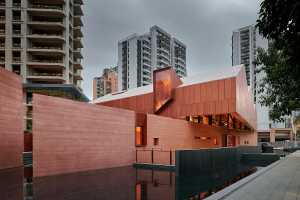
Relic Shelter: a temple on water between memory and matter

Inspired by the Jinshan Temple and John Thomson's iconic 1871 photograph, the Relic Shelter project transforms a precious Qing residence into a suspended teahouse, blending raw concrete, water reflections, and natural light to narrate the lost identity of Fuzhou.

A relic balancing between past and present

The project by the neri&hu architects studio is born from an indelible image: that of the Jinshan Temple, a rare example of a temple built in the middle of a river, immortalized in 1871 by John Thomson in the famous album Foochow and the River Min.
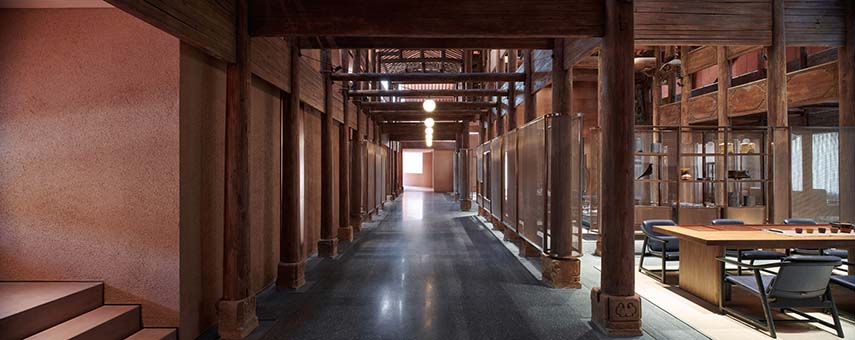
Today, that visual echo transforms into architecture with the Relic Shelter, a suspended volume that preserves and stages a precious fragment of Chinese history: the ancient wooden residence of a Qing dynasty official. Transported from Anhui to Fuzhou, this Hui structure becomes the inhabitable heart of a new tea house, in an attempt to reclaim the cultural identity threatened by rapid urban development.

A sacred volume emerging from the water

Conceived as a house on the rock, the teahouse rises above a base of beaten concrete, a material that pays homage to the ancient earth dwellings of the region. The wide, curvilinear copper roof echoes the silhouette of the underlying Qing building, establishing a formal dialogue between old and new. The entire complex is reflected in a surrounding body of water, creating a visual double between reality and reflection, weight and lightness. Visitors' approach is marked by this tension between contrasting elements: light and dark, rough and refined, full and empty.

Places of contemplation

The interior is structured around the large hall that houses the historic structure. Light wells (sky wells) penetrate the roof to naturally illuminate the artifact, emphasizing its cultural value. Only by going up to the mezzanine does the architectural configuration of the project reveal itself: the metal roof, raised 50 cm above the base thanks to trusses covered in copper, allows a continuous perimeter blade of light to filter through. The elevated path wraps around the Qing structure and allows for a close observation of the refined carpentry techniques, enhancing the ornamental details.

Liquid Light and Subterranean Rituals

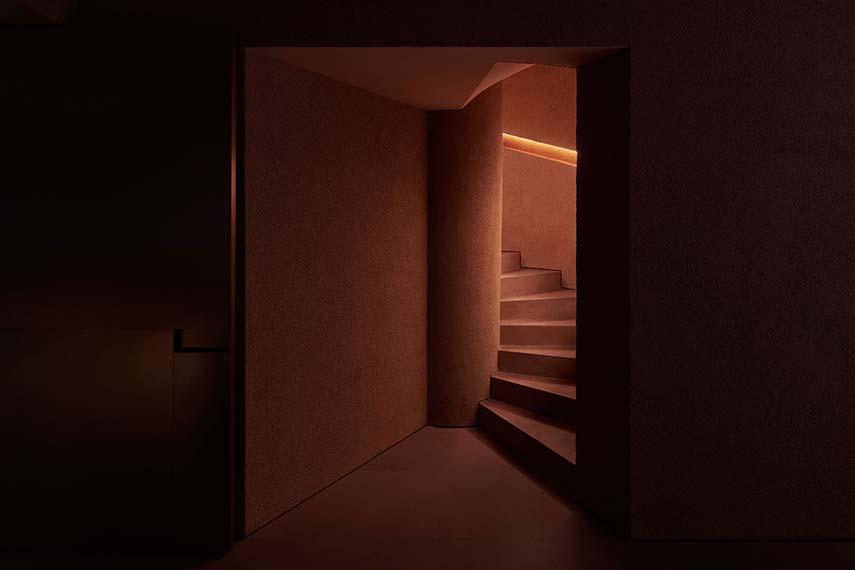
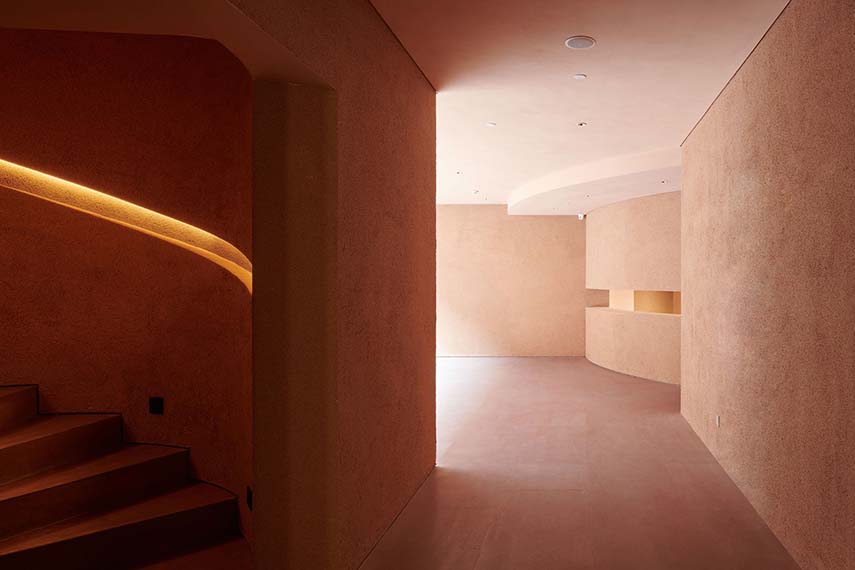
At the underground level, a more intimate and contemplative world opens up: a secondary entrance leads to a roundabout, a sunken courtyard, and a series of tasting rooms. At the center of the roundabout, a carved oculus covered with glass emerges under the water basin above. Sunlight, filtered through a liquid veil, refracts inside creating reflections that enhance the sensory experience of the place. The Relic Shelter is one of those architectural projects that celebrates memory, bringing it back to life in a contemporary space.

Gallery